
The UGC backdrop ideas have been well documented by this point. You have the foam board from the craft shop. The peel-and-stick wallpaper that allegedly looks like genuine marble but mostly looks like peel-and-stick wallpaper. The wallpaper sample book from a decorating centre that was technically free but now you have to avoid that retail park. The £12 Amazon backdrop that arrived in a tube and has been slightly curled at the edges ever since.
None of this is wrong. All of it is practical. And all of it is now indistinguishable from approximately half a million other pieces of content currently sitting in brand inboxes across the UK.
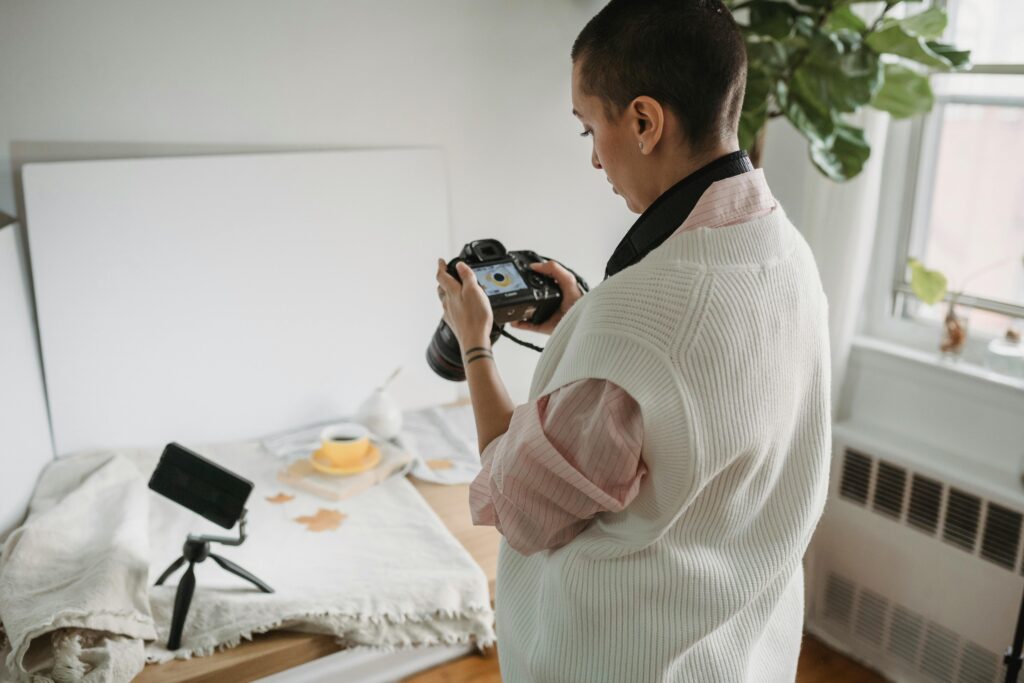
There is nothing wrong with foam boards as a concept. They are light, cheap, portable, and endlessly customisable. The creator community has built an entire cottage industry around sourcing, dressing, and photographing them. TikTok alone contains thousands of tutorials on the subject, ranging from the genuinely useful to the quietly heroic — one creator memorably described dragging her coffee table into a specific sunlit corner of her flat at a precise time of day to catch the right light, using a £12 backdrop from Amazon and a great deal of patience.
The problem is not the foam board. The problem is that everyone has one now.
The UGC creator population grew by 93% year-over-year, according to Collabstr’s 2025 Influencer Marketing Report — a dataset covering 40,000 advertisers and 100,000 creators.
That is not slow organic growth. That is a category that doubled in less than a year. And the vast majority of those creators are filming in the same kinds of spaces, against the same kinds of surfaces, with the same ring light positioned at broadly the same angle — not because they lack imagination, but because the advice they have been given tells them this is what they should do.
Kirk Axley, founder of The UGC Club, addressed this directly when discussing the home backdrop barrier: “When I speak to new creators, the way their home looks is often a barrier to getting started.”
His suggested workaround — renting a local Airbnb and absorbing the cost from a UGC fee — tells you everything you need to know about how acute the problem is. Creators are already spending money to escape their homes. They just do not yet have a better option than random Airbnbs.
The content creation industry has spent several years converging on the same visual language. Ring light. Plain wall. Decluttered surface. The occasional floating shelf with a plant on it. These choices were genuinely sensible when the category was new and the bar for entry was being filmed in adequate lighting. The bar has moved.
Brands are now receiving hundreds of pitches for every campaign, most of which feature the same environments. Performance marketing agency 85SIXTY put it plainly in their 2025 UGC analysis:
“There’s a UGC formula that’s been recycled so many times it no longer stops the scroll: […] It’s not that these formats never work. The problem is that they no longer feel fresh.”
Brand briefs now routinely specify filming environment as part of the creative brief — not just the product, hook, and delivery. Insense’s sample brief requirements include aesthetically pleasing environments and natural lighting as non-negotiables. Lemonlight’s UGC guide specifies an “authentic workout setting (not a professional gym)” for fitness content — showing that brands are thinking about visual context, not just presenter performance. The environment is part of the brief. It has always been visible. Now it is being evaluated.
The content creator backdrop ideas that are performing in 2026 share a common quality: they look like they were made somewhere real. Not in a studio. Not in front of a foam board. In an actual room with actual character — a kitchen with wooden worktops and morning light, a bathroom with original Victorian tiles, a bar with exposed brick and low wattage bulbs. The best content looks like it belongs to a specific place. That specificity is increasingly what separates the work that gets booked again from the work that gets filed and forgotten.
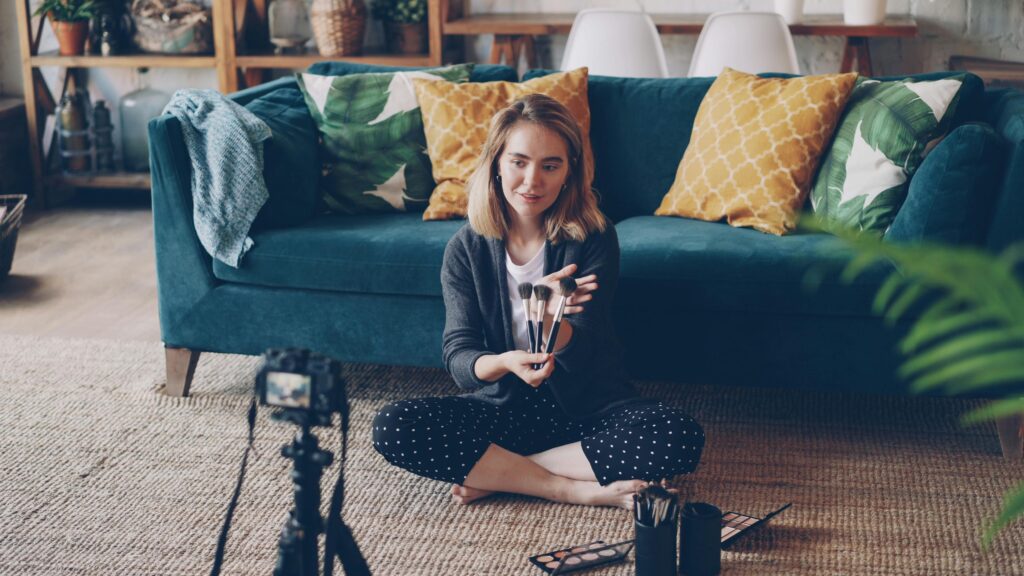
The lo-fi trend gets misunderstood. Lo-fi does not mean filmed in your bedroom against whatever surface was nearest the window. It means content that feels genuine — unscripted, natural, made in a place that actually exists. A shaky handheld shot in a characterful Victorian cafe is lo-fi. A shaky handheld shot in front of marble-print contact paper is also lo-fi, but it is lo-fi that is obviously pretending to be something it is not. Audiences have become very good at spotting the difference.
The engagement data supports this. Analysis of 3,000 business accounts on Instagram and TikTok found lo-fi content received around 34% more likes and 19% more comments than high-production equivalents — with A/B testing showing an average 11% higher conversion rate for lo-fi ads.
The consumer trust data behind this is not subtle. A 2019 Stackla survey of 1,590 consumers found that 90% say authenticity is important when deciding which brands to support.
An earlier Stackla study from 2017 found that 60% of consumers consider UGC the most authentic form of content available to them. Staged content — including obviously fake backdrops — undermines the authenticity signal that makes UGC valuable in the first place.
The best content creators match their filming environment to the product category they are working with. This is less complicated than it sounds, and the principle is consistent across brand briefs and industry guidance:
Food and drink: A real kitchen with natural light. Wooden worktops. A gas hob. Ambient warmth. Brands creating food UGC consistently specify kitchen settings because they look believable. A foam board behind a mug does not.
Beauty and skincare: A bathroom with interesting tilework and natural light from a window. The market for high-quality bathroom spaces for beauty content is genuinely undersupplied in the UK at accessible price points.
Fashion and lifestyle: Period interiors, industrial spaces, bars, cafes, anything with real visual texture. Content filmed in spaces with character consistently outperforms content filmed against neutral backgrounds in this category.
Wellness and fitness: Real movement spaces — yoga studios, dance floors, spaces with natural light and room to move. Not a spare bedroom with a folded-up treadmill visible in the background.
In every category, the common thread is the same: content filmed in a real, thoughtfully chosen environment outperforms content filmed against a DIY backdrop, because real environments carry visual credibility that foam boards cannot replicate
This is where the advice traditionally runs out. Most UGC guides acknowledge the home backdrop problem and then suggest either buying better foam boards or accepting it. The honest alternative — booking a genuinely characterful space — has historically meant navigating professional location agencies designed for television productions, where day rates begin at £1,000 and the paperwork assumes you have a production coordinator.
The UK content creation studio landscape is also heavily weighted towards London, where a decent hourly hire runs to £49–85 or more for a mid-range creative studio, with minimum booking windows that make a two-hour session for a single product video a significant budget commitment. For a newer or intermediate creator earning £100–200 per video — a realistic UK rate in 2026 according to After Hours Creator Club’s survey data — spending over £100 on a studio hire for that video is not a sustainable production model.
Established creators with strong portfolios — those typically charging £200–£400 or more per video — have more budget to work with, but even then the maths of a London studio hire can be uncomfortable. The gap is real. Creator Spots is a marketplace of hourly-bookable spaces in Thanet built specifically for independent content creators — [here is how it works for creators].
Creator Spots is building a marketplace of hireable spaces across Thanet — cafes, bars, period properties, and residential locations in Margate, Ramsgate, and Broadstairs — available to book by the hour, with no platform fees for creators. The spaces that make your content look genuinely different are available at a price that works for a working creator rather than a television production.
Margate has become one of the UK’s most photographed creative destinations for reasons that are immediately obvious when you arrive. Time Out named Northdown Road in Cliftonville one of the world’s coolest streets in 2025. Turner Contemporary has welcomed nearly 5 million visitors since opening in 2011, generated £68 million for the Kent economy, and catalysed over 150 new businesses in the area.
Sam Mendes chose Margate as the primary filming location for Empire of Light, and cinematographer Roger Deakins spoke of how the town brought an essential authenticity to the film — describing Margate as having given the production “a reality” that would have been impossible to manufacture elsewhere.
The buildings across Thanet are Georgian, Victorian, Edwardian, and Art Deco. The light off the coast is exceptional. Turner is said to have called the Thanet skies the loveliest in all Europe — an attribution widely repeated and, given that he spent decades returning to paint here, entirely plausible.
The platform is just launching in Thanet, which means spaces are available and the competition for them has not yet caught up. For creators looking to film a skincare video in a bathroom with original Victorian tilework, a food product in a kitchen with genuine wooden worktops and window light, or a lifestyle piece in a bar with exposed brick walls and real character — the spaces exist, they are bookable by the hour, and the journey from central London is under 90 minutes on the high-speed train from St Pancras.
The ring light was never the issue. The room was. If your content has started to blend in, the fix is a different location — not another lighting setup. The site is now live so Find Your Spot here!
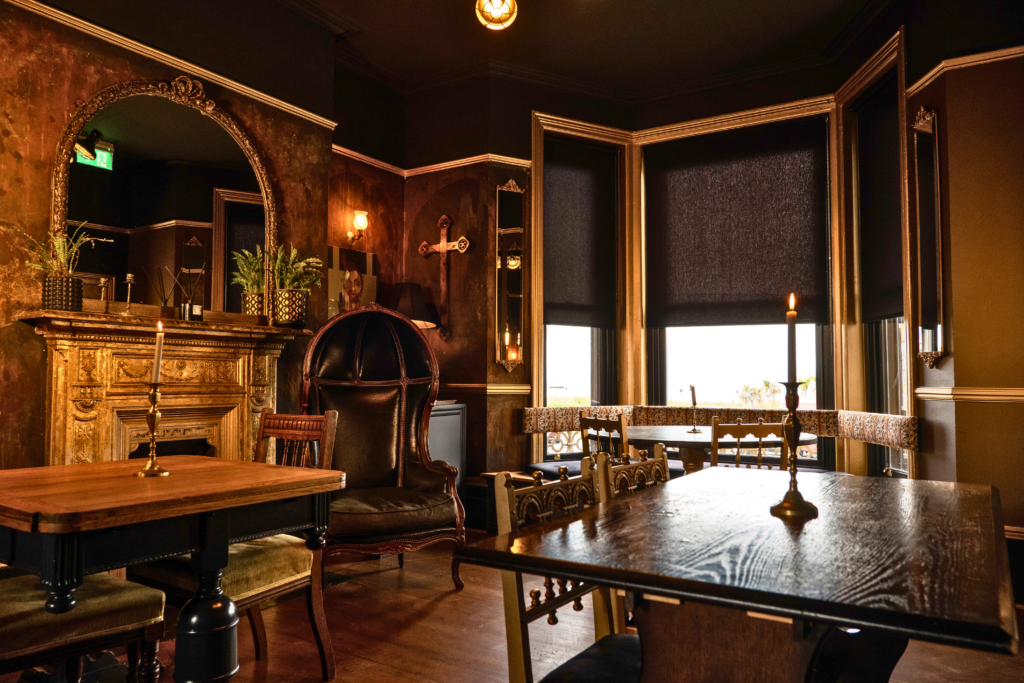
Compare the brand photoshoot locations collection or the houses for photoshoots collection. Each location has an enquiry form: share your brief, dates or flexibility, approximate hours and crew size. Availability, included spaces, the hire total and payment arrangements are agreed with the owner before confirmation.